

Caregiving Understanding Personal Care vs. Companion Care: What’s the Difference?

When a loved one begins to need extra support at home, families are often faced with unfamiliar caregiving terms. Two of the most common options you’ll encounter are personal care vs. companion care. While they may sound similar, these services serve different purposes and are designed to meet different levels of need.
At HouseWorks, we frequently help families understand these differences so they can choose the right level of care one that promotes safety, independence, and quality of life without providing more (or less) support than necessary.
This guide breaks down personal care vs. companion care, explains who each service is best for, and helps you determine which option is right for your family.
What Is Companion Care?
Companion care focuses on emotional support, social engagement, and help with everyday non-medical tasks. It is ideal for seniors who are largely independent but benefit from regular interaction and a helping hand around the home.
Key Features of Companion Care
Companion caregivers provide services such as:
- Friendly conversation and companionship
- Assistance with hobbies, games, or walks
- Meal planning and light meal preparation
- Light housekeeping (laundry, dishes, tidying)
- Grocery shopping and errands
- Transportation to appointments or social activities
- Medication reminders (non-administering)
The primary goal of companion care is reducing loneliness and supporting daily routines, not hands-on physical care.
Who Is Companion Care Best For?
Companion care is often a great fit for:
- Seniors living alone who feel isolated
- Individuals who no longer drive
- Older adults recovering from illness who need short-term help
- Family caregivers who need occasional respite
- Seniors with mild memory issues who benefit from supervision
Companion care allows clients to remain active, engaged, and connected while staying safely in their own homes.
What Is Personal Care?
Personal care involves hands-on assistance with activities of daily living (ADLs). This level of care is intended for individuals who need physical support with personal tasks due to aging, illness, injury, or disability.
Key Features of Personal Care
Personal care services typically include:
- Bathing and shower assistance
- Dressing and grooming
- Toileting and incontinence care
- Mobility and transfer assistance (bed to chair, walker support)
- Assistance with eating and hydration
- Skin care and hygiene monitoring
Personal care caregivers are trained to provide this support with dignity, respect, and safety, helping clients maintain comfort while preserving as much independence as possible.
Who Is Personal Care Best For?
Personal care is often the right choice for:
- Seniors with limited mobility
- Individuals recovering from surgery or hospitalization
- Clients with chronic conditions (arthritis, Parkinson’s, MS)
- Adults with disabilities requiring physical assistance
- Seniors with moderate to advanced dementia
This type of care is essential when daily personal tasks become difficult or unsafe to manage alone.
The Key Differences Between Personal Care and Companion Care
While both services support aging at home, the level and type of assistance differ significantly.
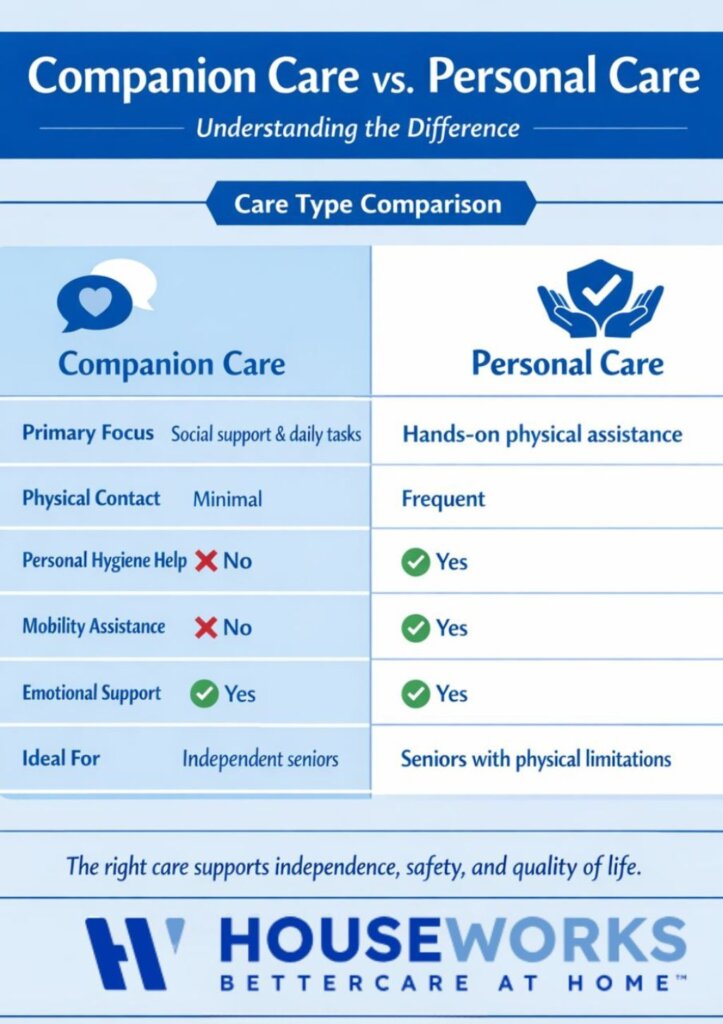
Understanding this distinction helps families choose care that truly meets their loved one’s needs without paying for services they don’t require.
Can Someone Receive Both Types of Care?
Absolutely. Many clients start with companion care and transition to personal care as their needs change. Others receive a blended approach from the beginning.
For example:
- A senior may receive companion care during the day for meals and socialization
- Personal care may be added in the morning and evening for bathing and dressing
This flexible approach allows care plans to evolve over time, ensuring continued safety and comfort.
Why Choosing the Right Level of Care Matters
Selecting the appropriate type of care has a direct impact on:
1. Safety
Personal care reduces fall risk, medication errors, and hygiene-related health issues.
2. Emotional Well-Being
Companion care helps combat isolation, depression, and anxiety—common concerns among older adults.
3. Independence
The right support empowers seniors to stay in their homes longer without feeling overdependent.
4. Family Peace of Mind
Knowing your loved one has the right level of care eases stress and prevents caregiver burnout.
Common Misconceptions About Companion and Personal Care
“Companion care is just babysitting.”
In reality, companion care plays a vital role in mental health, routine, and overall quality of life.
“Personal care means losing independence.”
On the contrary, personal care helps individuals maintain independence by providing support where it’s truly needed.
“We need to choose one forever.”
Care plans are flexible and can change as needs evolve.
Signs It May Be Time to Move From Companion Care to Personal Care
Families often notice subtle changes first. Common signs include:
- Difficulty bathing or dressing
- Increased falls or balance issues
- Noticeable weight loss due to difficulty eating
- Poor hygiene or skipped grooming
- Increased confusion or memory loss
When these signs appear, transitioning to personal care can significantly improve safety and comfort.
How HouseWorks Helps Families Decide
At HouseWorks, we don’t believe in one-size-fits-all care. Our CareTeams process includes:
- A comprehensive in-home assessment
- Understanding physical, emotional, and social needs
- Creating a customized care plan
- Matching clients with experienced, compassionate caregivers
- Adjusting care as needs change
Whether your loved one needs a friendly companion a few hours a week or daily hands-on personal care, our team is here to help guide you every step of the way.
Which Care Is Right for Your Loved One?
Choosing between personal care and companion care isn’t about labels — it’s about matching the right support to the right needs.
- If your loved one is mostly independent but needs connection and light help, companion care may be the perfect fit.
- If daily personal tasks have become challenging or unsafe, personal care offers essential hands-on support.
- If needs are changing, a combination of both ensures continuity and comfort.
Understanding these differences empowers families to make informed, confident decisions ones that support dignity, independence, and peace of mind.
If you’re unsure which option is best, the care team at HouseWorks is always available to help you explore your options and create a care plan tailored to your loved one’s unique needs.